
Cover Letter Dos and Don'ts: How to Make a Strong First Impression
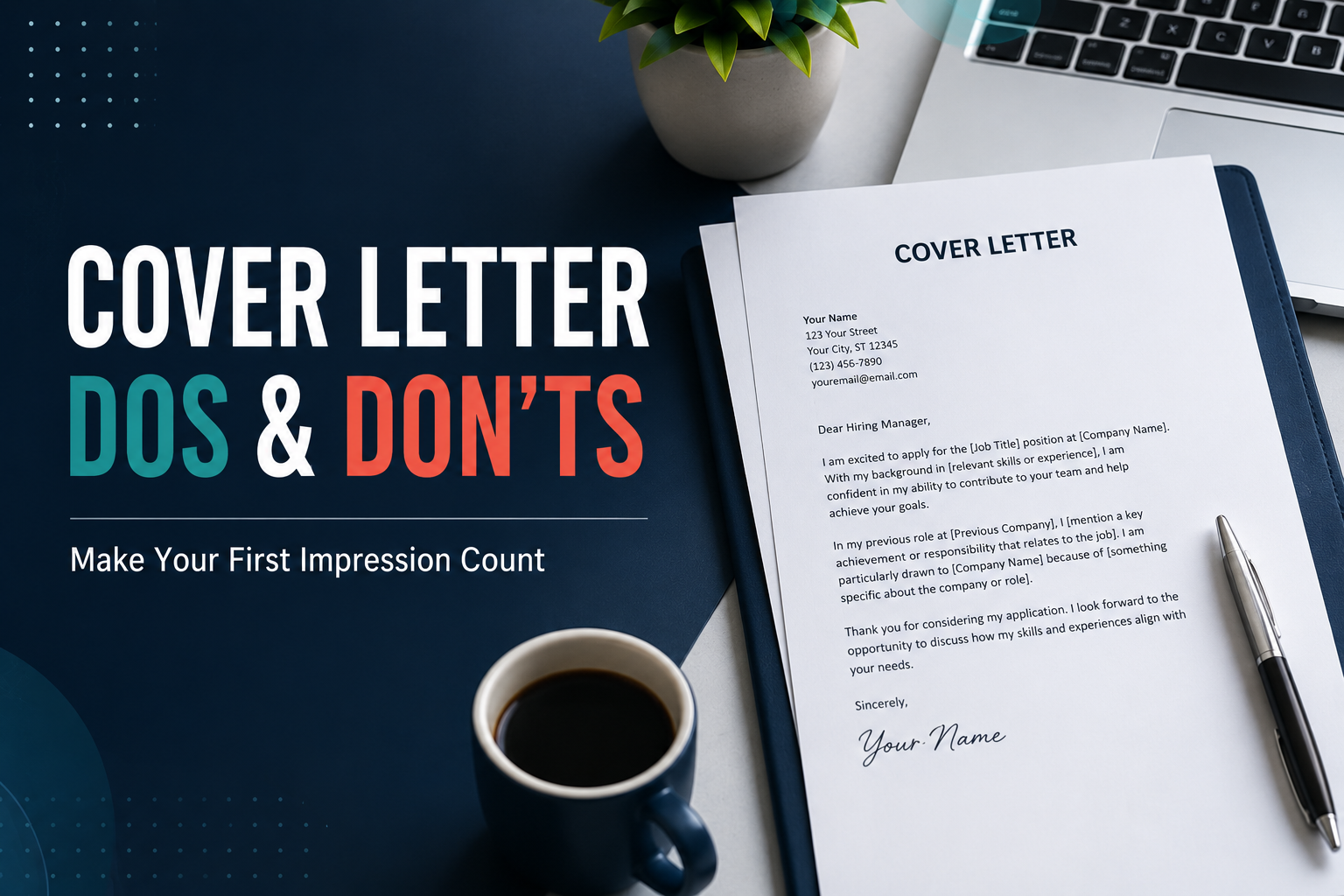
In today's competitive job market, every part of your application matters, and that includes your cover letter.
While some job seekers question whether cover letters are still relevant, hiring professionals continue to view them as an important part of the application process. A well-written cover letter gives you an opportunity to showcase your interest in the role, highlight your qualifications, and demonstrate professionalism beyond what is listed on your resume.
The key is knowing what employers expect and avoiding common mistakes that can hurt your chances.
Why Cover Letters Still Matter
A cover letter allows you to:
• Introduce yourself professionally
• Explain why you're interested in the role
• Highlight relevant experience and achievements
• Demonstrate your communication skills
• Show that you've taken the time to personalize your application
When used effectively, a cover letter can help you stand out from other candidates with similar qualifications.
Do: Keep It Concise
One of the most common mistakes job seekers make is writing cover letters that are too long
Hiring managers often review numerous applications, so clarity and brevity are essential.
A strong cover letter should:
• Be clear and focused
• Highlight only the most relevant qualifications
• Remain easy to scan and read
• Typically fit on a single page
Remember, your cover letter should complement your resume—not repeat it word for word.
Do: Use Professional Formatting
Your cover letter should look polished and professional.
Choose a clean, easy-to-read font such as:
• Times New Roman
• Calibri
• Arial
• Cambria
• Garamond
Maintain consistent formatting, appropriate spacing, and a professional structure throughout the document.
A well-formatted cover letter reflects attention to detail and professionalism.
Don't: Ignore Spelling and Grammar Errors
Even minor mistakes can create a negative impression.
Before submitting your application:
• Proofread multiple times
• Use spelling and grammar tools
• Ask someone else to review it if possible
A cover letter filled with errors may suggest a lack of attention to detail and reduce your chances of progressing to the next stage.
Don't: Exaggerate or Misrepresent Information
Honesty is essential throughout the hiring process.
While it can be tempting to embellish accomplishments or experience, doing so can damage your credibility if discovered later.
Instead, focus on presenting your genuine achievements confidently and professionally.
Authenticity is always more valuable than exaggeration.
Do: Customize Your Cover Letter
Generic cover letters are easy to spot.
Take time to tailor your content to:
• The specific role
• The company
• The skills and qualifications listed in the job posting
Personalized applications demonstrate effort and show employers that you are genuinely interested in the opportunity.
Don't: Overuse Clichés
Many cover letters contain overused phrases such as:
• "Results-oriented professional"
• "Team player"
• "Hardworking individual"
• "Go-getter"
Instead of relying on generic descriptions, provide specific examples that demonstrate your skills and accomplishments.
Show employers what makes you unique rather than using phrases that appear in countless applications.
Do: Include Relevant Keywords
Many employers use applicant tracking systems (ATS) to screen applications.
Review the job description carefully and incorporate relevant keywords related to:
• Skills
• Qualifications
• Industry terminology
• Responsibilities
Using appropriate keywords can improve the visibility of your application while also demonstrating alignment with the role.
Don't: Leave Out Requested Information
If the employer requests specific information in the job posting, ensure it is included.
This may include:
• Availability
• Certifications
• Portfolio links
• Salary expectations
• Specific qualifications
Failing to follow instructions can suggest a lack of attention to detail and may result in your application being overlooked.
Final Thoughts
A strong cover letter can significantly strengthen your job application when written thoughtfully and professionally.
Before submitting your next application, remember these key principles:
✔ Keep it concise and relevant
✔ Use professional formatting
✔ Proofread carefully
✔ Customize it for the role
✔ Include relevant keywords
✔ Be honest and authentic
Most importantly, focus on demonstrating how your skills and experience can add value to the organization.
A well-crafted cover letter isn't just an introduction—it's an opportunity to make a memorable first impression.